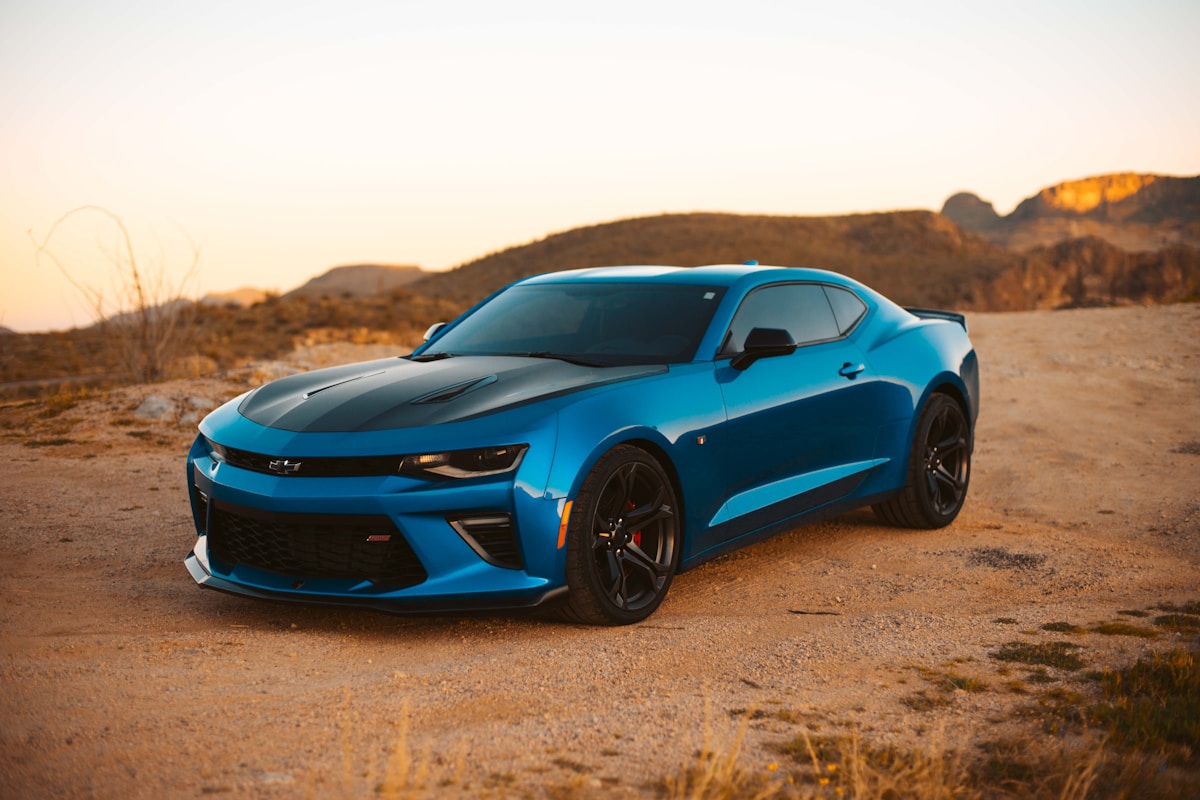
If you're planning a GM V8 build, you're facing one of the most common questions in the performance world: should you go with the legendary LS platform or the newer LT architecture? Both are incredible engines with massive aftermarket support, but they're fundamentally different in design, cost, and potential.
Having built dozens of LS and LT engines here at Raw Exotics, I can tell you this isn't a simple "one is better" situation. The right choice depends on your specific build goals, budget, and application. Let's break down everything you need to know to make an informed decision.
The LS Platform: The Legend
The LS engine family revolutionized the performance world when it debuted in the 1997 Corvette. GM's decision to use an aluminum block, modern port-fuel injection, and a compact package created what many consider the perfect V8 platform. Over two decades later, the LS remains the gold standard for engine swaps and performance builds.
LS Architecture Overview
The LS uses a Gen III/IV small block architecture with several key features:
- Port Fuel Injection: Individual injectors spray fuel into the intake ports, just before the intake valves. Simple, proven, effective.
- Coil-Near-Plug Ignition: Each cylinder has its own ignition coil mounted on the valve cover, providing precise spark control.
- Aluminum or Iron Block: LS1, LS2, LS3, LS6, LS7, LSA are aluminum. LS9, LQ4, LQ9, L33, LM7, and truck variants use iron blocks.
- Displacement Range: 4.8L (LR4) to 7.0L (LS7), with the most common being 5.3L, 6.0L, and 6.2L variants.
- Cable-Driven Throttle Body (Early): LS1 and some early LS engines use a traditional throttle cable. Later versions use electronic throttle control.
Popular LS Variants
- LS1 (5.7L): The original. 345-350 hp from the factory. Found in 1997-2004 Corvettes and 1998-2002 Camaros/Firebirds. Great affordable platform.
- LS2 (6.0L): 400 hp factory rating. Found in 2005-2007 Corvettes and GTOs. Improved heads and intake over LS1.
- LS3 (6.2L): 430 hp. 2008+ Corvettes, Camaros. Rectangular port heads, excellent factory flowing cylinder heads.
- LS7 (7.0L): 505 hp NA monster from the C6 Z06. Titanium rods, titanium valves, dry sump oiling. Premium price tag.
- LSA (6.2L Supercharged): 556-580 hp supercharged engine from CTS-V and ZL1. Eaton TVS supercharger, forged internals.
- LQ4/LQ9 (6.0L Iron Block): Truck engines with iron blocks. Cheap, plentiful, bulletproof foundation for boost. 300-345 hp stock but capable of 1000+ with upgrades.
The LT Platform: The Evolution
In 2014, GM introduced the LT engine family as the successor to the LS. The LT represents a complete redesign with modern technology aimed at improving efficiency, emissions, and performance. While it shares the same basic V8 architecture and displacement range as the LS, nearly everything else is different.
LT Architecture Overview
The LT uses Gen V small block architecture with significant technological advances:
- Direct Injection: Fuel is sprayed directly into the combustion chamber at extremely high pressure (2,175 psi). This allows for higher compression ratios and better efficiency.
- Variable Valve Timing: Both intake and exhaust cams use active fuel management (AFM/Dynamic Fuel Management) for improved fuel economy and broader powerband.
- Integrated Exhaust Manifolds: The exhaust manifolds are cast into the cylinder heads, reducing weight and package size but limiting header options.
- Advanced Valvetrain: The LT uses a more sophisticated valvetrain with VVT and optional cylinder deactivation.
- Electronic Throttle Control: All LT engines use drive-by-wire throttle with no cable option.
Popular LT Variants
- LT1 (6.2L): 455-460 hp. Found in 2014+ Corvettes, Camaros, and some trucks. DI only on early versions, DI+port injection on later models.
- LT4 (6.2L Supercharged): 650 hp. C7 Z06, ZL1 Camaro, CT5-V Blackwing. Eaton TVS supercharger, forged rotating assembly, intercooled.
- LT5 (6.2L Supercharged): 755 hp. C7 ZR1 exclusive. Largest Eaton supercharger ever on a production car, dual-injection (DI + port), dry sump.
- L87 (6.2L): Truck/SUV variant with cylinder deactivation. 420 hp. Found in Silverado, Sierra, Tahoe, Yukon.
- L86 (6.2L): Earlier truck variant without DI, uses port injection only. 420 hp in trucks.
Key Differences: LS vs LT
Now let's get into the technical differences that actually matter for your build.
Fuel Delivery System
LS Platform: Port fuel injection is simple and proven. Injectors spray fuel into the intake ports at relatively low pressure (58 psi). The aftermarket has decades of experience tuning port injection, and parts are cheap and plentiful. Upgrading injectors is straightforward and inexpensive.
LT Platform: Direct injection is more complex. High-pressure fuel pumps (driven mechanically off the camshaft) deliver fuel at 2,175 psi directly into the cylinder. This allows for higher compression ratios (11.5:1 vs 10.5:1 typical on LS), better fuel atomization, and cooler intake charge. However, upgrading the fuel system is more expensive, and fewer tuners have deep LT experience. Later LT engines (2017+) use dual injection—both direct and port—combining the benefits of both systems.
Winner for Simplicity: LS. Port injection is easier to understand, easier to modify, and cheaper to upgrade.
Winner for Efficiency and Technology: LT. Direct injection provides measurable benefits in fuel economy and power potential from the factory.
Cylinder Heads and Exhaust
LS Platform: Traditional separate cylinder heads and exhaust manifolds. The aftermarket offers hundreds of cylinder head options from mild street heads to full CNC race heads. You can easily bolt on long tube headers for massive exhaust flow gains. Porting options are endless, and every machine shop in America knows how to work on LS heads.
LT Platform: Integrated exhaust manifolds cast into the heads. This saves weight and package space, but it means you can't install traditional long tube headers without completely replacing the cylinder heads. Some companies offer LT headers, but they're expensive ($2000-3500) and require significant modification. Cylinder head options are limited compared to LS, and fewer shops have LT porting experience.
Winner: LS. The separate exhaust manifolds and massive head selection give you far more options for naturally aspirated builds.
Variable Valve Timing
LS Platform: Most LS engines have no VVT. Some late LS3 variants have single-cam VVT, but it's not universal. This means cam swaps are straightforward—install the cam, tune the engine, done.
LT Platform: All LT engines have dual VVT (intake and exhaust). This provides excellent drivability and a broad powerband, but it complicates camshaft upgrades. You can delete VVT with a cam phaser delete kit, but this requires additional parts and tuning. Alternatively, you can use VVT-compatible cams, but the selection is limited.
Winner for Simplicity: LS. No VVT means easier cam swaps.
Winner for Drivability: LT. Dual VVT provides better low-end torque and high-RPM power simultaneously.
Aftermarket Support
LS Platform: Twenty-five years of aftermarket development means you can buy literally anything for an LS engine. Need a billet intake manifold? Twelve companies make them. Want forged pistons? Fifty options. Custom cam grind? Every cam company has a dozen LS-specific profiles. The LS has the single largest aftermarket of any modern engine.
LT Platform: The aftermarket is growing but still significantly behind the LS. Major companies like Texas Speed, Comp Cams, and BTR offer LT parts, but selection is limited. Some components—like intake manifolds and cylinder heads—have very few options compared to LS.
Winner: LS by a landslide. The aftermarket for LS is unmatched.
Power Potential Comparison
Let's talk about real-world power potential for both platforms across different build levels.
Stock Engine with Bolt-Ons
LS3 (6.2L) with Bolt-Ons: 430 hp stock → 480-510 hp with headers, intake, cam, and tune. Gains of 50-80 hp.
LT1 (6.2L) with Bolt-Ons: 460 hp stock → 500-530 hp with intake, cam, tune. Headers are limited, so gains are slightly less. Gains of 40-70 hp.
Edge: Slight advantage to LS3 due to easier header installation, but LT1 starts with higher factory power.
Heads/Cam Package (Naturally Aspirated)
LS3 with Ported Heads + Cam: 550-600 hp with good porting, aggressive cam, full bolt-ons.
LT1 with Ported Heads + Cam: 560-610 hp. The higher compression and DI provide a slight edge in power, but head options are limited.
Edge: LT1 makes slightly more power with similar mods, but LS3 has far more head and cam options.
Boosted Applications (Turbo/Supercharger)
LS3 with Boost: On pump gas (93 octane), stock bottom end can handle 550-650 hp depending on tune conservativeness. On E85 or race gas, 700-800 hp is possible on stock internals. With forged internals, 1000-1500+ hp is common.
LT1 with Boost: Stock bottom end on pump gas: 600-700 hp. The direct injection and higher factory compression help here. On E85, 800-900 hp is achievable. With forged internals, 1200-1500+ hp is possible, though fewer people have tested the absolute limits compared to LS.
Edge: LT1 has a slight advantage at moderate boost levels due to DI and higher compression. LS3 has the advantage at extreme power levels due to more proven combinations and better aftermarket support.
Cost Analysis: LS vs LT
Let's talk money. Performance builds are expensive, and the platform you choose significantly impacts your budget.
Initial Engine Cost
- Used LS1 (5.7L): $1500-2500
- Used LS2 (6.0L): $2500-3500
- Used LS3 (6.2L): $3500-5000
- Used LS7 (7.0L): $9000-14,000
- Used LQ4/LQ9 (6.0L Iron): $500-1200 (junkyard special)
- Used LT1 (6.2L): $4000-6500
- Used LT4 (6.2L Supercharged): $15,000-20,000
- Used L87 (6.2L Truck): $3500-5000
Advantage: LS. Used LS engines are significantly cheaper and more available.
Performance Parts Costs
Here's a comparison for a typical heads/cam/intake package:
LS3 Build:
- Ported cylinder heads: $2500-3500
- Camshaft kit: $600-1200
- Intake manifold: $400-800
- Long tube headers: $800-1500
- Total: $4300-7000
LT1 Build:
- Ported cylinder heads: $3500-5000 (fewer options, more expensive)
- Camshaft kit: $800-1400 (VVT-compatible or phaser delete required)
- Intake manifold: $600-1000 (fewer options)
- Headers: $2000-3500 (expensive due to integrated manifolds)
- Total: $6900-10,900
Advantage: LS by a significant margin. You can build an LS cheaper than an LT at every performance level.
Tuning Costs
Both platforms require custom tuning, but LT tuning is typically more expensive due to fewer experienced tuners and more complex ECU programming (DI, VVT, etc.).
- LS Tuning: $600-1000 for street tune
- LT Tuning: $800-1400 for street tune
Which Platform Should You Choose?
After building both platforms extensively, here's my recommendation based on different scenarios:
Choose LS If:
- You're building on a budget and want maximum performance per dollar
- You're doing an engine swap (LS swaps are easier with more swap kits available)
- You want the absolute largest selection of aftermarket parts
- You're planning a naturally aspirated build with headers and ported heads
- You want a simpler engine without VVT or direct injection complexity
- You're chasing big horsepower (1000+ hp) and want proven combinations
- You value the huge knowledge base and support community
Choose LT If:
- You already have an LT-powered vehicle (2014+ Corvette, Camaro, truck)
- You want the latest technology (DI, dual VVT) and don't mind the complexity
- You're building a street car and want modern drivability with good fuel economy
- You're doing a mild build and the factory LT power is close to your goals
- You're going forced induction and want the efficiency of direct injection
- Budget isn't a primary concern and you want the newest platform
The Middle Ground: L87/L8T Truck Engines
If you want LT technology without the full cost, consider an L87 or L8T truck engine. These use DI and VVT but are cheaper than LT1/LT4 engines. They're becoming popular for swaps, especially in trucks and SUVs.
Real-World Build Examples
Let me share a few builds we've completed here at Raw Exotics to illustrate the differences:
Budget LS Build: 2006 GTO with LQ9
- Junkyard LQ9 6.0L iron block: $800
- BTR Stage 3 cam package: $900
- LS3 valve springs: $280
- Ported 243 heads (customer sourced): $1200
- FAST 102mm intake: $650
- Kooks long tubes: $1200
- Custom tune: $800
- Total parts cost: $5830
- Result: 525 hp / 515 lb-ft
LT1 Build: 2016 Camaro SS
- Stock LT1 engine (customer vehicle)
- TSP LT1 VVT cam: $1100
- Upgraded valve springs: $450
- Ported factory heads: $2200
- Intake upgrade: $750
- Custom tune: $1000
- Total parts cost: $5500 (no headers due to cost)
- Result: 510 hp / 470 lb-ft
Both builds made great power, but the LS build was cheaper overall and made more power thanks to headers and the iron block's strength allowing more aggressive tuning.
The Verdict
There's no universal "best" choice between LS and LT. The LS remains the king of affordability, aftermarket support, and simplicity. If you're building on a budget, doing a swap, or chasing big power, the LS is still the way to go in 2024.
The LT represents the future with modern technology, better efficiency, and slightly more power potential from the factory. If you already own an LT vehicle or budget isn't a concern, the LT is an excellent platform. But be prepared for higher parts costs and a smaller aftermarket selection.
"I love both platforms, but for 90% of builds, I still recommend the LS. The cost savings and massive aftermarket mean you get more performance for your dollar. The LT is brilliant engineering, but the LS is a proven legend that's hard to beat."
Need Help Deciding?
Choosing between LS and LT depends on your specific vehicle, budget, and goals. We build both platforms regularly and can help you make the right choice for your situation. Give us a call at (713) 299-1168 or stop by the shop in Houston. We'll discuss your build plan and create a package that delivers the performance you want at a price you can afford.